
The epic confrontation between the Inca Empire, led initially by Emperor Atahualpa, and the Spanish conquistadors under Francisco Pizarro is a tale of imperial ambition, tragic misjudgment, and resilient resistance. This clash, culminating in the fall of the largest empire in pre-Columbian America, is a pivotal chapter in the history of the New World. The story of the Inca resistance against Spanish colonisation, while marked by its swift and brutal conclusion, also reflects the complexities of early global interactions and the inevitable turmoil of cultural collisions.
The Inca Empire at its Zenith
Before the arrival of the Spanish, the Inca Empire, known as Tawantinsuyu, was an astonishing achievement of organisation, engineering, and administration. Stretching along the western part of South America, encompassing what is today Peru, Ecuador, Bolivia, and parts of Chile and Argentina, the empire was a mosaic of languages, peoples, and cultures, all integrated under the rule of the Sapa Inca (the emperor).
Atahualpa: Ascension and civil war
Atahualpa ascended to power amidst a devastating civil war with his brother Huáscar, which weakened the empire and divided its loyalties. The conflict had profound consequences, leaving the empire vulnerable to external threats and internal divisions just as the Spaniards arrived on its shores.
Pizarro meets Atahualpa
Francisco Pizarro, motivated by tales of a rich empire in the Andes, embarked on an expedition that led him into the heart of the Inca Empire. In November 1532, Pizarro and a small but well-armed force of Spanish conquistadors met with Atahualpa at Cajamarca in the northern highlands of Peru. The Inca emperor, confident in his numerical superiority, underestimated the technological and tactical advantages of the Spaniards.
The meeting at Cajamarca quickly turned into a deadly ambush. The Spaniards, utilising their cavalry, firearms, and surprise, massacred thousands of unarmed Inca attendants and captured Atahualpa. This event was a seismic shock to the Inca Empire, leaving it leaderless and disoriented.
The ransom of Atahualpa
In a bid for freedom, Atahualpa offered the Spaniards a ransom: a room filled with gold and two more with silver. Pizarro accepted, and vast amounts of precious metals were delivered to Cajamarca over the following months. Despite receiving the ransom, Pizarro reneged on his promise, driven by greed and fear of Inca retribution.
Atahualpa’s execution and the aftermath

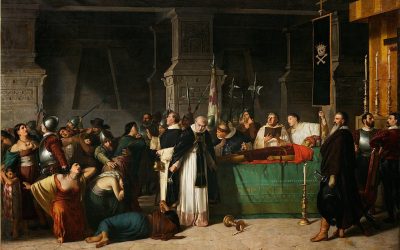
(Lima Art Museum, Public domain, via Wikimedia Commons)
In July 1533, under dubious charges of conspiracy and idolatry, Atahualpa was sentenced to death by Pizarro. His execution marked a turning point in the Spanish conquest of the Inca Empire. With Atahualpa gone, the Spaniards installed puppet rulers while consolidating their control.
Despite losing their emperor, Inca resistance continued under leaders like Manco Inca, who initially cooperated with the Spaniards but later led a rebellion against them. Manco Inca’s forces besieged the Spanish-held city of Cusco. They established a neo-Inca state in Vilcabamba, sustaining resistance for several decades.
The legacy of the conquest
The fall of the Inca Empire was not just the result of military confrontation but also the consequence of disease, which decimated the indigenous population. The Spanish conquest transformed the cultural, political, and social landscape of the Andes, introducing European institutions, religion, and culture.
For Atahualpa, his legacy is complex. He is remembered both as the last free reigning emperor of the Incas and as a symbol of the tragic consequences of misjudgment and underestimation. The story of his capture and execution remains a poignant reminder of the ruthlessness of the conquest.
Reflecting on the Inca resistance
The resistance of the Incas, led initially by Atahualpa, against the Spanish colonisers, is a story that encapsulates the clash of empires, cultures, and worldviews. It is a narrative that speaks to the resilience of the human spirit in the face of overwhelming odds and to the inevitable tragedy that ensues when worlds collide. As a chapter in the broader tapestry of world history, the fall of the Inca Empire and the resistance against Spanish conquest continue to resonate, offering lessons about courage, resilience, and the complexities of human interactions across cultures.


Leave a Reply