
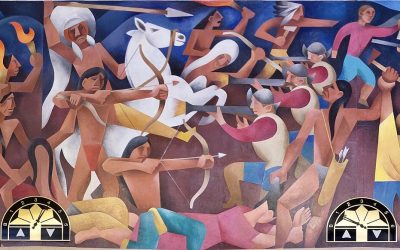
In North American history, few events stand as starkly against the backdrop of European colonisation as the Pueblo Revolt of 1680 (also known as Popé’s Rebellion or Popay’s Rebellion). This uprising, a remarkable instance of indigenous resistance, saw the Pueblo peoples of present-day New Mexico rise against their Spanish colonisers in a coordinated and, ultimately, successful rebellion. The revolt changed the course of history in the American Southwest and stands as a testament to the resilience and agency of Native American communities in the face of European expansion.
Background: Seeds of discontent
The roots of the Pueblo Revolt stretch back to the early 17th century when the Spanish established a colonial foothold in the region in their quest for gold and souls. The Spanish imposed their culture, religion, and governance on the Pueblo people, disrupting their traditional way of life. The Franciscan missionaries, in particular, were zealous in their efforts to convert the Pueblo people to Christianity, often resorting to coercion and harsh punishment for practising their ancestral rituals.
The Pueblos, known for their agricultural prowess and intricate societal structures, were forced into labour under the encomienda system, where they toiled on lands they had once owned. The Spanish also brought with them new diseases, which wreaked havoc on the native population, further exacerbating their suffering and discontent.
The spark: A leader emerges
The immediate catalyst for the revolt was the persecution of Pueblo religious leaders by Spanish authorities. In 1675, Governor Juan Francisco Treviño ordered the arrest of 47 Pueblo shamans, accusing them of witchcraft. Four were hanged, and the rest were publicly whipped and imprisoned. Among the imprisoned was a man from the Ohkay Owingeh Pueblo, known to history as Popé. His detention and the broader assault on Pueblo religious practices would galvanise a resistance movement.
Popé, upon his release, became the architect of an uprising that was as strategic as it was audacious. He secretly travelled to various Pueblos, using a network of runners to disseminate plans for a coordinated revolt. The rebellion was initially planned for 13 August 1680, but when the Spaniards learned of the impending uprising, the date was moved up to 10 August.
The revolt: A unified uprising
On the appointed day, the Pueblo people, uniting across language and cultural lines, launched their rebellion. From Taos to Isleta, the Pueblos rose in unison, a synchronised insurrection that took the Spaniards by surprise. Armed with traditional weapons and sheer determination, the rebels laid siege to Santa Fe, the seat of Spanish power.
The Spanish were ill-prepared for the intensity and scale of the uprising. The Pueblos, employing tactics born of intimate knowledge of their lands, quickly overran Spanish settlements and missions, destroying symbols of Spanish authority and culture. Churches were razed, and symbols of Christianity were destroyed in a symbolic reversal of the Spanish conquest.
Aftermath: A brief but significant victory
After a siege lasting several days, the Pueblo forces succeeded in capturing Santa Fe, driving out Governor Antonio de Otermín and the remaining Spaniards, who retreated south to El Paso. The Pueblo Revolt had achieved what few Indigenous uprisings before or since have managed: it expelled European colonisers from their lands, albeit temporarily.
For the next 12 years, the Pueblos would enjoy a period of autonomy and cultural revitalisation. They reinstated their traditional rituals and governance, free from Spanish interference. However, this period of independence did not last. In 1692, the Spanish, led by Diego de Vargas, returned to the region and successfully reconquered the Pueblos, albeit with less harsh policies.
Legacy: Remembering the revolt
The Pueblo Revolt holds a significant place in Native American history. It stands as a powerful example of indigenous resistance and unity in the face of colonial oppression. The revolt demonstrated the capability of different Pueblo communities to collaborate toward a common goal, transcending linguistic and cultural barriers.
Today, the story of the Pueblo Revolt serves as a reminder of the enduring spirit of the Pueblo people and a testament to their struggle for sovereignty and cultural preservation. It remains a pivotal chapter in the broader narrative of resistance against colonialism in the Americas. This chapter resonates with the ongoing struggles of indigenous peoples for recognition and rights.
In the annals of history, the Pueblo Revolt is more than just a moment of triumph; it is a story of resilience, unity, and the unquenchable desire for freedom. As we reflect on the past, the legacy of the Pueblo peoples and their remarkable uprising continues to inspire and instruct, reminding us of the power of collective action in the face of overwhelming odds.


Leave a Reply