• Skip to main content
  • Skip to after header navigation
  • Skip to site footer
Our history archive

Our History

Our History Archive, where history comes to life

  • Home
  • Colonisation
  • World History
  • Civil Rights
  • World cultures
  • Features
  • Wellbeing
  • Popular Culture

The impact of cultural appropriation on affected communities

Cultural appropriation
Popular culture
12 August, 2017

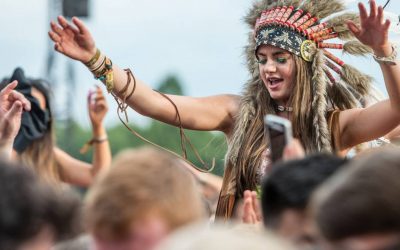
Cultural appropriation can be defined as a dominant group adopting elements of a minority culture without acknowledging the original source. More often than not, this occurs without understanding the historical or cultural significance of the borrowed elements. While some argue that cultural appropriation is a form of flattery or cultural exchange, it’s essential to understand how it negatively affects Black and brown people financially and culturally.

Financial Impacts

1. Loss of potential earnings

When dominant cultures appropriate other cultures’ significant elements, it can result in lost economic opportunities for the marginalised communities. Their authentic products are often overlooked in favour of mass-produced or cheaper options produced by dominant groups.

2. Influence on creative industries

The fashion, art, and music industries often capitalise on culturally appropriated elements, resulting in minimal financial benefits for the original creators. In turn, this may widen the economic gap between marginalised communities and their counterparts, further perpetuating systemic inequality.


3. Reduced market value

If a product loses its uniqueness due to mass reproduction, its value decreases. As a result, communities that create authentic cultural products may suffer market devaluation, leading to lower sales and reduced income generation.

Cultural impacts

1. Misrepresentation

Cultural appropriation often results in a distorted representation of marginalised cultures as it removes essential historical or cultural contexts from the element that has been appropriated. This can lead to stereotypes and reinforce racial biases.

2. Erosion of cultural identity

Communities’ artistic and cultural expressions are essential to their identity formation and sense of history. When components of these cultures are taken out of context for commercial use or seen as “trendy,” marginalised communities may feel stripped of their heritage.

3. Disrespect and disregard

Cultural appropriation can be experienced as an insult or violation by oppressed groups. Their concerns are frequently dismissed as unimportant or labelled as overly sensitive. This lack of understanding and respect reinforces the belief that their culture is not valued, which can lead to further marginalisation.

Conclusion

Recognising cultural appropriation’s economic and cultural effects on marganalised people is crucial. Instead of perpetuating harm by commodifying their culture, we must learn to appreciate and respect all cultures as integral parts of our global heritage. We can work together to create meaningful cultural exchange without causing harm by fostering understanding and empathy.


Share this:

  • Share on Facebook (Opens in new window) Facebook
  • Share on X (Opens in new window) X
  • Share on Reddit (Opens in new window) Reddit
  • Share on Pinterest (Opens in new window) Pinterest
  • Share on WhatsApp (Opens in new window) WhatsApp

Related

You May Also Like…

The culture wars are a magic trick

The culture wars are a magic trick (and you’re the mark)

Idris Elba and the word woke

Sir Idris Elba and the word “woke”

Line of women and children walking along a dusty road, carrying large bundles on their heads amid a refugee-like crowd.

Nakba Day: An unresolved wound

man in brown suit jacket writing on table inside the library

The 3 Best free online libraries for reading books and historical sources


Reader Interactions

Leave a ReplyCancel reply

Sidebar

This Day In History

No Events

Recent posts

The culture wars are a magic trick

The culture wars are a magic trick (and you’re the mark)

Idris Elba and the word woke

Sir Idris Elba and the word “woke”

Line of women and children walking along a dusty road, carrying large bundles on their heads amid a refugee-like crowd.

Nakba Day: An unresolved wound

Recent posts

man in brown suit jacket writing on table inside the library

The 3 Best free online libraries for reading books and historical sources

Dr Carter G. Woodson, George Cleveland Hall and Alexander L. Jackson - A century of Black history commemorations

A century of Black history commemorations: How Black History Month began and why it matters today

man in yellow sweater holding book beside woman in brown sweater

Top 10 most influential books in history

Trending

  • What are British values?
    What are British values?
  • Mexican culture: A living mosaic of civilisations, faith, and tradition
    Mexican culture: A living mosaic of civilisations, faith, and tradition
  • The colonisation of India
    The colonisation of India
  • Top 10 most influential books in history
    Top 10 most influential books in history
  • Was Hitler a socialist? Setting the record straight
    Was Hitler a socialist? Setting the record straight
  • The Somerset v Stewart Case: A Landmark Decision in the History of Slavery and Abolition
    The Somerset v Stewart Case: A Landmark Decision in the History of Slavery and Abolition
  • History of the Chagos Islands: A tale of colonialism
    History of the Chagos Islands: A tale of colonialism
  • The rise and fall of the Persian Empire
    The rise and fall of the Persian Empire
  • Who was Sarah Baartman?
    Who was Sarah Baartman?
  • Women's suffrage movement in Britain
    Women's suffrage movement in Britain

Connect

  • YouTube
  • TikTok
  • Bluesky

ABOUT

CONTACT

PRIVACY POLICY

COOKIES

Copyright © 2026 · Our History · All Rights Reserved