• Skip to main content
  • Skip to after header navigation
  • Skip to site footer
Our history archive

Our History

Our History Archive, where history comes to life

  • Home
  • Colonisation
  • World History
  • Civil Rights
  • World cultures
  • Features
  • Wellbeing
  • Popular Culture

The Act of Union: Uniting England and Scotland

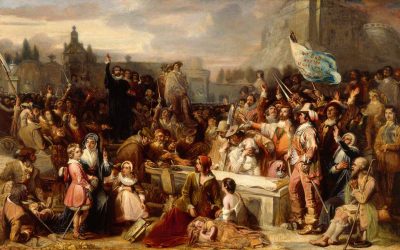
Allan, William; The Signing of the National Covenant in Greyfriars Kirkyard, Edinburgh; City of Edinburgh Council; http://www.artuk.org/artworks/the-signing-of-the-national-covenant-in-greyfriars-kirkyard-edinburgh-93072
World history
2 April, 2010

The Act of Union in 1707 was a significant moment in British history that brought together the kingdoms of Scotland and England, forging a united Parliament of Great Britain. This union had long been proposed; however, suspicion and mistrust hindered its realisation for a century. 

The Scottish people feared losing their sovereignty and becoming merely another region of England, similar to what happened with Wales 400 years earlier. In contrast, the English feared that Scotland might form an alliance with France, turning their soldiers against England.

A pivotal event in favour of the union happened in the late 1690s after thousands of Scots invested their money in the doomed Darien Scheme  – an attempt to establish a Scottish colony in Panama to create an overland trading route between the Pacific and Atlantic oceans. The venture ended disastrously in 1700, causing heavy casualties and leaving the Kingdom of Scotland facing financial ruin.


The disaster swayed multiple Scottish MPs to consider joining forces with England. As poet Robert Burns put it, they were “bought and sold for English gold.” Finally, on January 16th, 1707, the Act of Union was signed by a sparse gathering at the Scottish Parliament. It became effective on May 1st of that year when the Scottish Parliament and English Parliament combined to form one entity – the Parliament of Great Britain.

The merger led to a new national flag for Great Britain – also known as the ‘Old’ Union Flag – featuring the blue cross of St. Andrew (Scotland) and the red cross of St. George (England). Although it’s popularly known as Union Jack, this term is correctly used only when flown on a warship’s jackstaff.

Scotland maintained independence concerning its legal system and religious practices; however, its sovereignty faced considerable changes after signing the act. Both countries now operated under common coinage, taxation, trade regulations, and a shared parliament. The union proved successful in the long run, and by 1850, the United Kingdom accounted for around 40% of the total world trade.

The Act of Union between England and Scotland was an important milestone in creating a powerful and economically successful entity – the United Kingdom. The journey towards unity was fraught with challenges and hesitations from both sides. Yet, it ultimately led to a formidable bond that helped in shaping the world stage for years to come.

Share this:

  • Share on Facebook (Opens in new window) Facebook
  • Share on X (Opens in new window) X
  • Share on Reddit (Opens in new window) Reddit
  • Share on Pinterest (Opens in new window) Pinterest
  • Share on WhatsApp (Opens in new window) WhatsApp


Related

You May Also Like…

Hitler was not a socialist

Was Hitler a socialist? Setting the record straight

More details Merida - Palacio de Gobierno - Murals by Fernando Castro Pacheco: The Spanish bishop Diego de Landa is burning figures of Mayan deities

The forgotten fire: A history of the Darfur Genocide

The Japanese occupation of Beiping (Beijing) in China

The rise and fall of the Japanese Empire

Rescuers and residents searching the rubble of the destroyed Shajareh Tayyebeh elementary school in Minab

The fracturing of the international order in an age of impunity


Reader Interactions

Leave a ReplyCancel reply

Sidebar

This Day In History

Events in History
On this day in 1977 The Lewisham 21 Defence Committee held a demonstration in New Cross in support of 21 young black people who were arrested in dawn raids in May. 300 demonstrators marched, while 100 members of the fascist National Front turned up to attack them, hurling bags of caustic soda at the protesters. Over 60 people were arrested in the clashes. These events culminated in the Battle of Lewisham.

World history recent posts in

Hitler was not a socialist

Was Hitler a socialist? Setting the record straight

More details Merida - Palacio de Gobierno - Murals by Fernando Castro Pacheco: The Spanish bishop Diego de Landa is burning figures of Mayan deities

The forgotten fire: A history of the Darfur Genocide

The Japanese occupation of Beiping (Beijing) in China

The rise and fall of the Japanese Empire

Rescuers and residents searching the rubble of the destroyed Shajareh Tayyebeh elementary school in Minab

The fracturing of the international order in an age of impunity

Trending

  • The rise and fall of the Persian Empire
    The rise and fall of the Persian Empire
  • What are British values?
    What are British values?
  • The colonisation of India
    The colonisation of India
  • Five countries that colonised the world
    Five countries that colonised the world
  • The history of South Africa: From colonisation to independence
    The history of South Africa: From colonisation to independence
  • Fact check: The etymology of picnic
    Fact check: The etymology of picnic
  • John F. Kennedy: An overview
    John F. Kennedy: An overview
  • The history of the full English breakfast: A cultural institution
    The history of the full English breakfast: A cultural institution
  • Profile on Oliver Cromwell
    Profile on Oliver Cromwell
  • Sudan: From ancient kingdoms to independence
    Sudan: From ancient kingdoms to independence

Connect

  • YouTube
  • TikTok
  • Bluesky

ABOUT

CONTACT

PRIVACY POLICY

COOKIES

Copyright © 2026 · Our History · All Rights Reserved