• Skip to main content
  • Skip to after header navigation
  • Skip to site footer
Our history archive

Our History

Our History Archive, where history comes to life

  • Home
  • Colonisation
  • World History
  • Civil Rights
  • World cultures
  • Features
  • Wellbeing
  • Popular Culture

Joseph Stalin: The man, the myth, the legacy

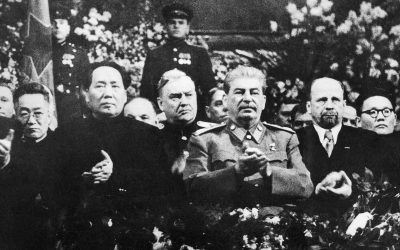
Stalin and Mao
Joseph Stalin at his 71st birthday celebration with (left to right) Mao Zedong, Nikolai Bulganin, Walter Ulbricht and Yumjaagiin Tsedenbal (Helsingin Sanomat, Public domain, via Wikimedia Commons)
World history
8 April, 2022

Joseph Stalin, born Ioseb Besarionis dze Jughashvili, was a Soviet politician who ruled the Soviet Union as the General Secretary of the Communist Party and later as Premier. His reign spanned from 1922 until he died in 1953. Often regarded as a controversial figure, Stalin reshaped the USSR both internally and externally through his policies and decisions. This article will delve into the rise of Joseph Stalin, his policies during his time in power, and the lasting effects of his leadership on the Soviet Union and the world.

The early life and rise of Stalin
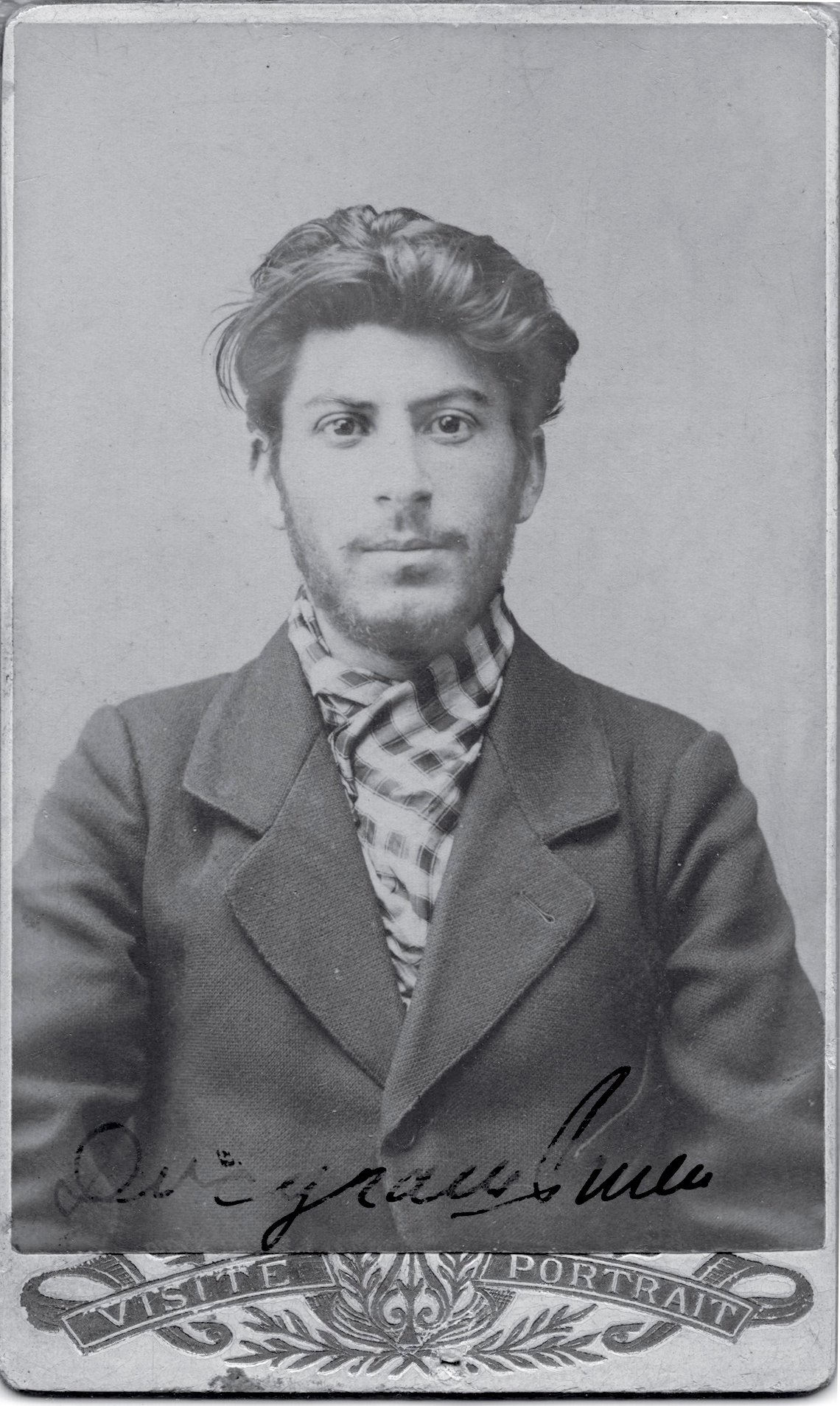
Joseph Stalin
Police photograph of Stalin, taken in 1902, when he was 23 years old (Batum Gendarme Administration, Public domain, via Wikimedia Commons)

Born in Gori, Georgia on 18 December 1878, Stalin was raised in a humble family. His father, an alcoholic shoemaker, subjected him to a difficult childhood filled with violence. Turning to education for solace, he attended the Gori church school, where he enrolled in the Russian Orthodox seminary. However, his life would soon change when he discovered Marxism writings in 1899.

Stalin’s interest in politics led to his expulsion from the seminary in 1901. He subsequently joined forces with revolutionaries to overthrow the Tsarist autocracy in Russia. In 1912, he eventually became an editor at “Pravda”, a Marxist newspaper. His rise through the ranks continued during the October Revolution, led by Lenin in October 1917. By April 1922, at Lenin’s request, he became General Secretary of the Communist Party.


Policies and reign

Stalin’s time in power saw significant transformations within the Soviet Union. As domestic and foreign threats loomed over their nation, one of his most consequential decisions was undertaking rapid industrialisation to modernise it. The First Five Year Plan was launched in 1928, focusing primarily on heavy industries such as steel, coal, and electricity. Though rapid industrialisation did take a human toll due to forced labour in the Gulags and famines caused by agricultural policies, it boosted the economy of the Soviet Union.

Collectivisation was another aspect of Stalin’s rule that deeply impacted Soviet society. Seeking to improve agricultural output and centralise control over resources, he abolished private farms and merged them into collective farms. This process led to widespread famines, notably in Ukraine, where millions perished in the Holodomor famine.
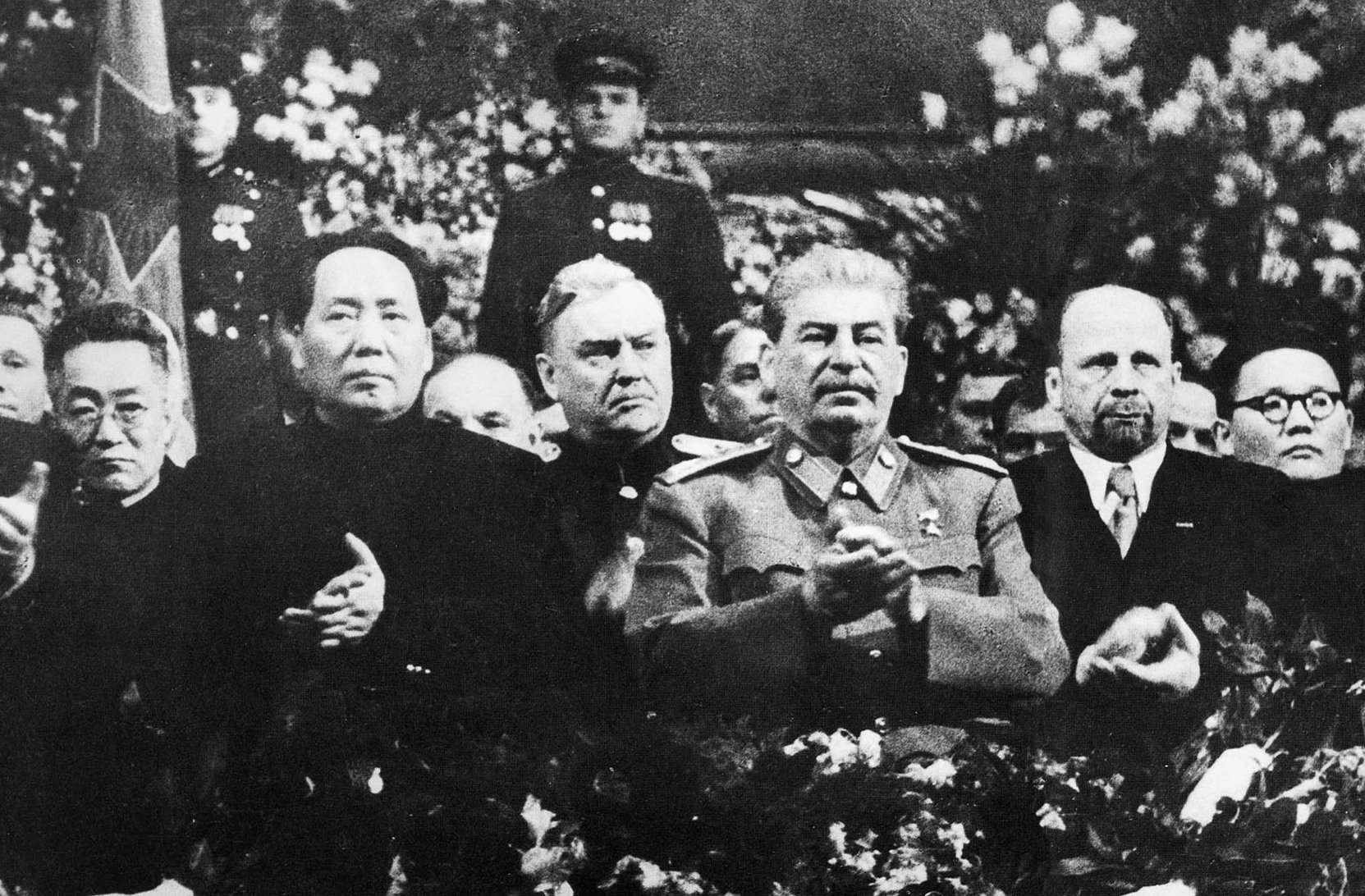
Stalin and Mao
Joseph Stalin at his 71st birthday celebration with (left to right) Mao Zedong, Nikolai Bulganin, Walter Ulbricht and Yumjaagiin Tsedenbal (Helsingin Sanomat, Public domain, via Wikimedia Commons)

The Great Terror unfolded between 1936 and 1938 under Stalin’s rule. The events saw an unprecedented wave of purges targeting prominent politicians, military officials, intellectuals, and ordinary citizens accused of conspiring against the Soviet State. Hundreds of thousands were executed or sent to prisons and labour camps during this period. As a result, many contemporaries and historians consider these years a reign of terror.

Stalin’s role in World War II cannot be overlooked either. His leadership saw successes such as victory at the Battle of Stalingrad, which proved pivotal in turning the tide against Adolf Hitler’s forces. However, his initial pact with Hitler (the Molotov-Ribbentrop Pact) led to a devastating German invasion of the USSR.

Legacy

Joseph Stalin passed away on 5 March 1953. In many ways, his leadership moulded the Soviet Union into a global superpower during his tenure. However, his legacy remains shrouded in controversy due to the oppressive nature of his regime and the resulting suffering endured by millions.


The true extent of Joseph Stalin’s impact on history continues to be debated among scholars; however, one thing is clear: he will remain one of the most influential figures in modern world history.

Share this:

  • Share on Facebook (Opens in new window) Facebook
  • Share on X (Opens in new window) X
  • Share on Reddit (Opens in new window) Reddit
  • Share on Pinterest (Opens in new window) Pinterest
  • Share on WhatsApp (Opens in new window) WhatsApp

Related

You May Also Like…

More details Merida - Palacio de Gobierno - Murals by Fernando Castro Pacheco: The Spanish bishop Diego de Landa is burning figures of Mayan deities

The forgotten fire: A history of the Darfur Genocide

The Japanese occupation of Beiping (Beijing) in China

The rise and fall of the Japanese Empire

Rescuers and residents searching the rubble of the destroyed Shajareh Tayyebeh elementary school in Minab

The fracturing of the international order in an age of impunity

US ambassador to the UN, Eleanor Roosevelt, holding the Universal Declaration of Human Rights in 1949

The role and limitations of international law in world affairs


Reader Interactions

Leave a ReplyCancel reply

Sidebar

This Day In History

Events in History
On this day in 1856 The Treaty of Paris (1856) was signed, marking the end of the Crimean War. This historic agreement was reached between Russia and a coalition of nations, including France, Great Britain, Sardinia-Piedmont, and Turkey, effectively closing a tumultuous chapter in European history.

World history recent posts in

More details Merida - Palacio de Gobierno - Murals by Fernando Castro Pacheco: The Spanish bishop Diego de Landa is burning figures of Mayan deities

The forgotten fire: A history of the Darfur Genocide

The Japanese occupation of Beiping (Beijing) in China

The rise and fall of the Japanese Empire

Rescuers and residents searching the rubble of the destroyed Shajareh Tayyebeh elementary school in Minab

The fracturing of the international order in an age of impunity

US ambassador to the UN, Eleanor Roosevelt, holding the Universal Declaration of Human Rights in 1949

The role and limitations of international law in world affairs

Trending

  • History of Canada - From colonisation to independence
    History of Canada - From colonisation to independence
  • Multicultural London English: Evolution from cockney to a global linguistic mosaic
    Multicultural London English: Evolution from cockney to a global linguistic mosaic
  • Holy Wars: The blood-soaked legacy of conflicts fought in the name of Christianity
    Holy Wars: The blood-soaked legacy of conflicts fought in the name of Christianity
  • The rise and fall of the Persian Empire
    The rise and fall of the Persian Empire
  • The rise and fall of the Ottoman Empire: Six centuries of imperial power
    The rise and fall of the Ottoman Empire: Six centuries of imperial power
  • Bay of Pigs 1961: The CIA’s failed invasion that changed the Cold War
    Bay of Pigs 1961: The CIA’s failed invasion that changed the Cold War
  • The Banana Wars: America's forgotten military interventions in Central America
    The Banana Wars: America's forgotten military interventions in Central America
  • What are British values?
    What are British values?
  • The colonisation of India
    The colonisation of India
  • The First Red Scare: America's post-WWI fear of Communism and radical change
    The First Red Scare: America's post-WWI fear of Communism and radical change

Connect

  • YouTube
  • TikTok
  • Bluesky

ABOUT

CONTACT

PRIVACY POLICY

COOKIES

Copyright © 2026 · Our History · All Rights Reserved