• Skip to main content
  • Skip to after header navigation
  • Skip to site footer
Our history archive

Our History

Our History Archive, where history comes to life

  • Home
  • Colonisation
  • World History
  • Civil Rights
  • World cultures
  • Features
  • Wellbeing
  • Popular Culture

Inspirational women: NASAs human computers

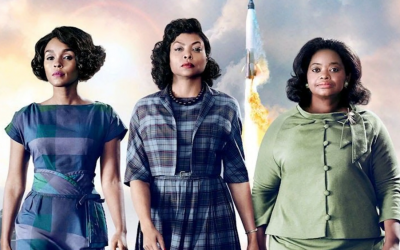
Hidden Figures
Features
3 March, 2017

The woman who inspired me most outside of my family has to be my primary school teacher. Through her, I learned to love history and poetry and went on to discover more phenomenal women such as Josephine Baker, Ida B Wells, Rosa Parks and, of course, Maya Angelou and many more.

But I’m not going to talk about any of those ladies today because, having recently watched Hidden Figures, I’ve discovered three more women that deserve to be honoured right now.

Katherine Johnson

Katherine Johnson

Katherine Coleman Goble Johnson (born August 26, 1918) is an African-American physicist and mathematician who made contributions to the United States aeronautics and space programs with the early application of digital electronic computers at NASA.


Known for accuracy in computerised celestial navigation, she conducted technical work at NASA that spanned decades. During this time, she calculated the trajectories, launch windows, and emergency backup return paths for many flights from Project Mercury, including the early NASA missions of John Glenn and Alan Shepard and the 1969 Apollo 11 flight to the Moon, through the Space Shuttle program. Her calculations were critical to the success of these missions. Johnson also did calculations for plans for a mission to Mars.

In 2015, Johnson received the Presidential Medal of Freedom. She was included in the BBC series 100 Women the next year.

Dorothy Vaughan

Dorothy Vaughan

Dorothy Johnson Vaughan (September 20, 1910 – November 10, 2008) was an African American mathematician and human computer who worked for the National Advisory Committee for Aeronautics (NACA) and NASA at Langley Research Center in Hampton, Virginia. In 1949, she became acting supervisor of the West Area Computers, the first African-American woman to supervise a staff at the centre.

Dorothy was later promoted officially to this position. During her 28-year career, she prepared for the introduction of machine computers in the early 1960s by teaching herself and her staff the programming language of FORTRAN; she later headed the programming section of the Analysis and Computation Division (ACD) at Langley.

Mary Jackson

Mary Jackson

Mary Winston Jackson was an African American mathematician and aerospace engineer at the National Advisory Committee for Aeronautics, which in 1958 was succeeded by the National Aeronautics and Space Administration (NASA).


Mary worked at Langley Research Center in Hampton, Virginia, for most of her career. She started as a computer at the segregated West Area Computing division. She took advanced engineering classes and, in 1958, became NASA’s first black female engineer.

Since the release of Hidden Figures, these ladies are hidden no more. If you haven’t seen the film and feel like a pride boost, you should go and see it. It’s uplifting to be able to say with your chest, “women did that!” and the fact that they were black at a time when segregation was still a thing is a massive achievement.

Share this:

  • Share on Facebook (Opens in new window) Facebook
  • Share on X (Opens in new window) X
  • Share on Reddit (Opens in new window) Reddit
  • Share on Pinterest (Opens in new window) Pinterest
  • Share on WhatsApp (Opens in new window) WhatsApp

Related

You May Also Like…

More details Jesse Jackson surrounded by marchers carrying signs advocating support for the Hawkins-Humphrey Bill for full employment,

Keep hope alive: The rise, power, and legacy of Jesse Jackson

The revolutionary icon: Ernesto "Che" Guevara

Ernesto “Che” Guevara: : The revolutionary icon

Portrait of Bartolomé de Las Casas (c.1484 - 1566)

Bartolomé de las Casas and the birth of human rights

William Randolph Hearst

William Randolph Hearst: The king of Yellow Journalism


Reader Interactions

Leave a ReplyCancel reply

Sidebar

This Day In History

Events in History
On this day in 1922 Joseph Stalin became secretary-general of the Communist Party of the Soviet Union.
More details Jesse Jackson surrounded by marchers carrying signs advocating support for the Hawkins-Humphrey Bill for full employment,

Keep hope alive: The rise, power, and legacy of Jesse Jackson

The revolutionary icon: Ernesto "Che" Guevara

Ernesto “Che” Guevara: : The revolutionary icon

Portrait of Bartolomé de Las Casas (c.1484 - 1566)

Bartolomé de las Casas and the birth of human rights

Trending

  • The rise and fall of the Persian Empire
    The rise and fall of the Persian Empire
  • The First Red Scare: America's post-WWI fear of Communism and radical change
    The First Red Scare: America's post-WWI fear of Communism and radical change
  • What are British values?
    What are British values?
  • Mexican culture: A living mosaic of civilisations, faith, and tradition
    Mexican culture: A living mosaic of civilisations, faith, and tradition
  • Holy Wars: The blood-soaked legacy of conflicts fought in the name of Christianity
    Holy Wars: The blood-soaked legacy of conflicts fought in the name of Christianity
  • The 1832 Paris Uprising
    The 1832 Paris Uprising
  • The Birth of the National Health Service: A revolutionary moment in British history
    The Birth of the National Health Service: A revolutionary moment in British history
  • The rise and fall of the Ottoman Empire: Six centuries of imperial power
    The rise and fall of the Ottoman Empire: Six centuries of imperial power
  • The colonisation of Chile: The long road to freedom
    The colonisation of Chile: The long road to freedom
  • Francisco Franco: Spain's controversial dictator
    Francisco Franco: Spain's controversial dictator

Connect

  • YouTube
  • TikTok
  • Bluesky

ABOUT

CONTACT

PRIVACY POLICY

COOKIES

Copyright © 2026 · Our History · All Rights Reserved