• Skip to main content
  • Skip to after header navigation
  • Skip to site footer
Our history archive

Our History

Our History Archive, where history comes to life

  • Home
  • Colonisation
  • World History
  • Civil Rights
  • World cultures
  • Features
  • Wellbeing
  • Popular Culture

History of Jamaica Welfare

Norman Manley
World history
24 July, 2014

Jamaica Welfare was founded by Norman Manley in 1937. It was the first large scale social welfare organisation on the island. It was formed from suggestions Manley made to United Fruit Company President Samuel Zemurray , while acting as a lawyer for the Jamaica Banana Producers Association.

In the 1930s a plant disease killed off the banana industry in Jamaica. It became necessary to plant another type of banana but the workers kept leaving the countryside and filling up the towns searching for odd jobs.


To stem the exodus of workers, Manley asked Zemurray to set up a fund for the Jamaica Banana Producers Co-operative. Although he disliked co-ops, Zemurray agreed to give one penny for every bunch of bananas exported. And so Jamaica Welfare was born for the good and welfare of the people of Jamaica, with emphasis on the rural people.

Jamaica Welfare paid staff to go into communities to organise co-operative businesses. The programme consisted largely of practical adult education, co-operative training, cottage industries, and group activity in agriculture and manufacturing. People were taught different types of craftwork and the crafts were sold on.

The Adult Literacy Programme was themed “Each One Teach One” based on the Laubach teaching principles. The philosophy behind “Each One Teach One” meant that if you could read, you could teach another person to read. No teaching skills required. For Jamaica Welfare this meant that people taught their skills to others, not just reading and writing.
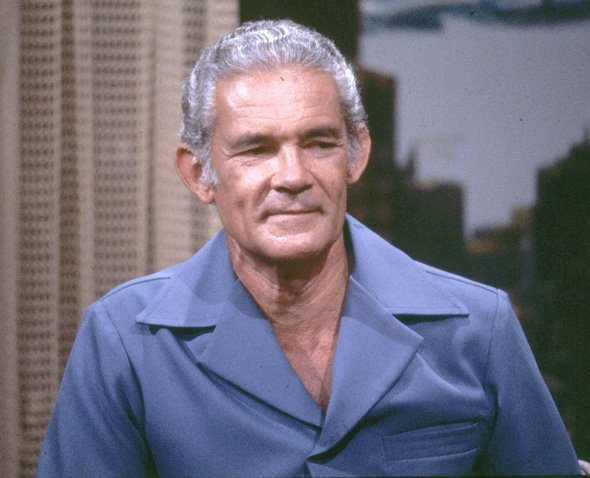
Norman Manley’s son, Michael later expanded the programme in the 1970s and called it the Jamaican Movement for the Advancement of Literacy (JAMAL).


Jamaica Welfare set up self-help housing and had programmes where they taught rural people health care. During the Second World War, Jamaica Welfare was utilised to organise food from Jamaica for the war effort.

Jamaica Welfare became the Jamaica Social Welfare Commission during the Second World War. In the 1960s it evolved into Social Development commission and it is still called that today.

Share this:

  • Share on Facebook (Opens in new window) Facebook
  • Share on X (Opens in new window) X
  • Share on Reddit (Opens in new window) Reddit
  • Share on Pinterest (Opens in new window) Pinterest
  • Share on WhatsApp (Opens in new window) WhatsApp

Related

You May Also Like…

More details Merida - Palacio de Gobierno - Murals by Fernando Castro Pacheco: The Spanish bishop Diego de Landa is burning figures of Mayan deities

The forgotten fire: A history of the Darfur Genocide

The Japanese occupation of Beiping (Beijing) in China

The rise and fall of the Japanese Empire

Rescuers and residents searching the rubble of the destroyed Shajareh Tayyebeh elementary school in Minab

The fracturing of the international order in an age of impunity

US ambassador to the UN, Eleanor Roosevelt, holding the Universal Declaration of Human Rights in 1949

The role and limitations of international law in world affairs


Reader Interactions

Leave a ReplyCancel reply

Sidebar

This Day In History

Events in History
On this day in 1922 Joseph Stalin became secretary-general of the Communist Party of the Soviet Union.

World history recent posts in

More details Merida - Palacio de Gobierno - Murals by Fernando Castro Pacheco: The Spanish bishop Diego de Landa is burning figures of Mayan deities

The forgotten fire: A history of the Darfur Genocide

The Japanese occupation of Beiping (Beijing) in China

The rise and fall of the Japanese Empire

Rescuers and residents searching the rubble of the destroyed Shajareh Tayyebeh elementary school in Minab

The fracturing of the international order in an age of impunity

US ambassador to the UN, Eleanor Roosevelt, holding the Universal Declaration of Human Rights in 1949

The role and limitations of international law in world affairs

Trending

  • The rise and fall of the Persian Empire
    The rise and fall of the Persian Empire
  • The First Red Scare: America's post-WWI fear of Communism and radical change
    The First Red Scare: America's post-WWI fear of Communism and radical change
  • What are British values?
    What are British values?
  • Mexican culture: A living mosaic of civilisations, faith, and tradition
    Mexican culture: A living mosaic of civilisations, faith, and tradition
  • The 1832 Paris Uprising
    The 1832 Paris Uprising
  • The Birth of the National Health Service: A revolutionary moment in British history
    The Birth of the National Health Service: A revolutionary moment in British history
  • Holy Wars: The blood-soaked legacy of conflicts fought in the name of Christianity
    Holy Wars: The blood-soaked legacy of conflicts fought in the name of Christianity
  • The colonisation of Chile: The long road to freedom
    The colonisation of Chile: The long road to freedom
  • Francisco Franco: Spain's controversial dictator
    Francisco Franco: Spain's controversial dictator
  • The Russian Empire: From expansion to the demise of empire
    The Russian Empire: From expansion to the demise of empire

Connect

  • YouTube
  • TikTok
  • Bluesky

ABOUT

CONTACT

PRIVACY POLICY

COOKIES

Copyright © 2026 · Our History · All Rights Reserved