• Skip to main content
  • Skip to after header navigation
  • Skip to site footer
Our history archive

Our History

Documenting world history and civil rights

General

  • About
  • Cookies and your privacy
  • Privacy policy
  • Contact

Categories

  • Home
  • Colonisation
  • World History
  • Civil Rights
  • World cultures
  • Features
  • Wellbeing
  • Popular Culture
  • Home
  • Colonisation
  • World History
  • Civil Rights
  • World cultures
  • Features
  • Wellbeing
  • Popular Culture

What it means to be an agnostic

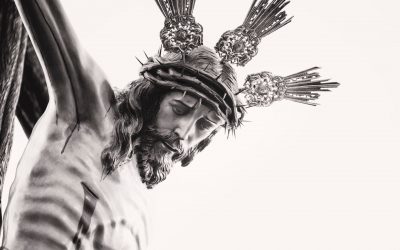
jesus christ crucifixion
Photo by Alem Sánchez on Pexels.com
Features
15 August, 2012

When exploring personal beliefs and worldviews, a question often arises regarding what it means to be agnostic. Agnosticism is a topic that can be both intriguing and complex. This article aims to investigate the concept of agnosticism, discuss its origins, highlight prominent thinkers who have embraced this perspective and provide insight into what it means to identify as agnostic.

Defining agnosticism

The term “agnostic” has its roots in Ancient Greek (a-gnosis), meaning “without knowledge.” Coined by English biologist Thomas Henry Huxley in 1869, agnosticism refers to the belief that it is impossible for human beings to know whether or not a higher power or deity exists. In contrast to atheism, which denies the existence of any such higher power, agnostics maintain that we cannot know for sure, either because there is insufficient evidence or because our finite human minds are inadequate to comprehend such matters.

Varieties of agnosticism

There are different ways one can approach agnosticism. Some of these variations include:


1. Hard/Strong Agnosticism – This form of agnosticism asserts that humans can never know for certain whether a deity exists. It is based on the idea that human knowledge and understanding are limited by our intellectual capacities or faulty senses.

2. Soft/Weak Agnosticism – This position holds that while we may not currently have conclusive evidence for or against the existence of a god or gods, future discoveries could reveal such evidence.

3. Empirical Agnosticism – This perspective maintains that questions about the existence of deities belong only in the realm of empirical observation and that anything beyond this sphere is simply unknowable.

4. Pragmatic Agnosticism – Pragmatic agnostics view questions about the existence of any higher power as irrelevant or unimportant, focusing instead on living their lives centred around morals and values.

Prominent agnostic thinkers

Some of the most influential thinkers who have embraced agnosticism at different points throughout history include Thomas Henry Huxley, Bertrand Russell, and Albert Einstein. Each of these individuals contributed significantly to human intellectual progress and demonstrated that one can lead a fulfilling life without asserting an ultimate truth about the existence or non-existence of a higher power.


Living as an agnostic

People who identify as agnostic tend to prioritise rational thought, scepticism, and scientific inquiry. They emphasise moral principles and ethical behaviour derived from various sources other than religious scripture or divine guidance. Agnostics find common ground in the quest for knowledge and the understanding that certainty in all things is not possible.

In conclusion, agnosticism represents diverse perspectives centred around the belief that humans can’t know with certainty whether a higher power exists. Throughout history, agnostic thinkers have demonstrated the importance of maintaining an open mind in pursuit of intellectual growth and personal development. Ultimately, living as an agnostic means accepting our limitations while seeking understanding in the ever-unfolding mystery of existence.

Share this:

  • Click to share on Facebook (Opens in new window) Facebook
  • Click to share on X (Opens in new window) X
  • Click to share on Reddit (Opens in new window) Reddit
  • Click to share on Pinterest (Opens in new window) Pinterest
  • Click to share on WhatsApp (Opens in new window) WhatsApp

Related

You May Also Like…

Black History Month: Standing in Power and Pride 2025

Standing firm in power and pride: Eight Black people who shaped history

Official portrait of Captain James Cook

Captain James Cook: Master navigator and Pacific explorer

Phyllis Coard: Architect of women's liberation in revolutionary Grenada

Phyllis Coard: Architect of women’s liberation in revolutionary Grenada

Statue of Yaa Asantewaa

The history of Nana Yaa Asantewaa: The lion-hearted queen mother


Reader Interactions

Leave a ReplyCancel reply

Sidebar

This Day In History

Events in History
On this day in 1831 On 27 December 1831, the Christmas Rebellion instigated by Samuel Sharpe began at the Kensington Estate in St James, Jamaica.
Person
On this day in 1822 French chemist and microbiologist Louis Pasteur was born.
Black History Month: Standing in Power and Pride 2025

Standing firm in power and pride: Eight Black people who shaped history

Official portrait of Captain James Cook

Captain James Cook: Master navigator and Pacific explorer

Phyllis Coard: Architect of women's liberation in revolutionary Grenada

Phyllis Coard: Architect of women’s liberation in revolutionary Grenada

Trending

  • Understanding Sharia Law: Principles, practice, and global context
    Understanding Sharia Law: Principles, practice, and global context
  • Holy Wars: The blood-soaked legacy of conflicts fought in the name of Christianity
    Holy Wars: The blood-soaked legacy of conflicts fought in the name of Christianity
  • The history of New Year celebrations: A journey through time
    The history of New Year celebrations: A journey through time
  • History of Comoros: From colonisation to independence
    History of Comoros: From colonisation to independence
  • The meaning of "Semite"
    The meaning of "Semite"
  • Genghis Khan: The making of the Mongol Empire
    Genghis Khan: The making of the Mongol Empire
  • The Moors: A confluence of Arab and Berber heritage
    The Moors: A confluence of Arab and Berber heritage
  • Vladimir Lenin: The revolutionary leader who shaped a nation
    Vladimir Lenin: The revolutionary leader who shaped a nation
  • The Albigensian Crusade: Christians killing Christians (1209-1229)
    The Albigensian Crusade: Christians killing Christians (1209-1229)
  • History of Canada - From colonisation to independence
    History of Canada - From colonisation to independence

Connect

  • YouTube
  • TikTok
  • Bluesky
  • About
  • Cookies and your privacy
  • Privacy policy
  • Contact

Copyright © 2025 · Our History · All Rights Reserved