
As Guyana emerges on the world stage with significant oil discoveries, Venezuela rekindles a centuries-old territorial dispute, raising concerns of regional instability.
In the shadows of the sprawling Amazon and the murmurs of the Atlantic, an old dispute has found new life. Venezuela, a nation beset by economic turmoil and political strife, has renewed its claim over a substantial portion of its eastern neighbour, Guyana, reigniting a colonial-era territorial conflict. This resurgence comes at a time when Guyana, long overshadowed in global affairs, has made significant strides in the oil sector, drawing international attention and investment.
The roots of this conflict trace back to colonial machinations and the tussle between European powers for dominance in South America. The Essequibo region, a swathe of land encompassing nearly 70% of Guyana, sits at the heart of this dispute. Venezuela’s claim to this territory stems from the colonial era, challenging the validity of the 1899 Arbitral Award that ceded control of the region to British Guiana, now Guyana. Despite various attempts at resolution, including the 1966 Geneva Agreement, the dispute has lingered, largely dormant but never fully resolved.

Venezuela’s renewed interest in the Essequibo region coincides with Guyana’s ascent as an emerging oil powerhouse. In recent years, significant offshore oil discoveries have transformed Guyana’s economic landscape, promising prosperity in a nation where it has been a rarity. The lure of these newfound resources is palpable for Venezuela, reeling under the weight of economic sanctions, hyperinflation, and political instability. However, it’s not just economic desperation driving Venezuela’s actions; there is a potent mix of nationalism and historical grievances at play.
The disparity in military strength and population between the two nations adds a stark dimension to this conflict. With a significantly larger population and military, Venezuela could pose a formidable threat to its smaller neighbour. The prospect of an armed conflict, however unlikely, casts a long shadow over the region, raising concerns among international observers and neighbouring countries.
The impact of such a dispute extends beyond the borders of these two nations. It challenges the principles of international law and the sanctity of colonial-era agreements, setting a precedent that could have far-reaching implications in a world where historical grievances and territorial claims are not uncommon. Moreover, it tests the efficacy and influence of regional bodies like the Organization of American States (OAS) and international courts in mediating and resolving such disputes.
The human dimension of this conflict cannot be understated. For the people of Guyana, the prospect of territorial loss is not just a matter of national pride but also of economic survival. The oil discoveries have been a beacon of hope for a nation grappling with poverty and underdevelopment. Any threat to this newfound potential is a threat to the aspirations of its people.
For Venezuela, this move could be seen as a diversionary tactic by a regime seeking to consolidate power and distract from domestic challenges. However, it risks further isolation and economic hardship, particularly if it invites international sanctions or military intervention.

The international community’s response will be crucial in the coming days. Diplomatic efforts, economic sanctions, or incentives, and the involvement of international courts and arbitration bodies could play a significant role in peacefully resolving this dispute. However, the solution lies not just in legal and diplomatic manoeuvres but in addressing the underlying issues of economic disparity, regional instability, and the lasting shadows of colonialism.
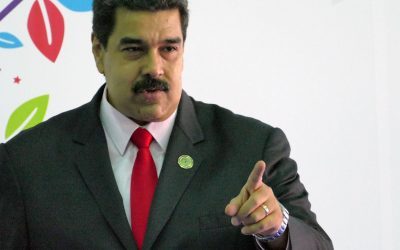
As the world watches, the question remains: Can a peaceful and equitable resolution be found, or will the echoes of history reverberate into conflict? Venezuelan President Nicolas Maduro rejects the court’s jurisdiction. He intends to put the question of annexation to Venezuelan voters in a referendum on 3 December.
For Guyana and Venezuela, the stakes are high, and the outcome will shape not just their futures but that of the entire region.


.png)
Leave a Reply