• Skip to main content
  • Skip to after header navigation
  • Skip to site footer
Our history archive

Our History

Documenting world history and civil rights

General

  • About
  • Cookies and your privacy
  • Privacy policy
  • Contact

Categories

  • Home
  • Colonisation
  • World History
  • Civil Rights
  • World cultures
  • Features
  • Wellbeing
  • Popular Culture
  • Home
  • Colonisation
  • World History
  • Civil Rights
  • World cultures
  • Features
  • Wellbeing
  • Popular Culture

The humanitarian crisis in Palestine

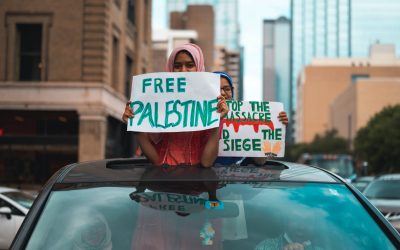
women on protest holding sigh free palestine
Popular culture
12 July, 2021

For over 70 years, the Palestinian people have suffered under Israel’s occupation. And today, the humanitarian crisis in Palestine is worse than ever. Over 2 million Palestinians live in Gaza, which is now the world’s largest open-air prison. Israel has imposed a land, air, and sea blockade on Gaza, making it impossible for civilians to leave or goods to enter. The result is an acute humanitarian crisis with sky-high unemployment, food insecurity, and medical shortages.

Palestinians continue to suffer from human rights violations, including military raids, detention without charge, and the destruction of homes and infrastructure. The Israeli military frequently raids schools and hospitals and imprisons or kills innocent civilians.

Palestinians also lack fundamental rights, including the right to freedom of movement, education, and the right to adequate healthcare. Israel’s blockade of Gaza has resulted in a humanitarian crisis, with 95% of Gaza’s water undrinkable and 37% of its population food insecure.


The effects of Israel’s occupation on the Palestinian people

The occupation has had a devastating impact on Palestinian society. The Israeli military has killed thousands of Palestinians, injured many more, and caused widespread destruction. Palestinians also suffer from regular military raids and checkpoints, making it difficult to move around or conduct normal life activities.

The occupation has had a negative effect on the Palestinian economy. The blockade of Gaza has caused widespread poverty and unemployment. Israel also confiscated Palestinian land and resources, which has hampered economic development.

The Israeli occupation has also had a negative effect on Palestinian politics. The Palestinian Authority cannot make decisions or implement policies without first obtaining Israeli approval. Palestinians also have no control over their borders or airspace, making it difficult to conduct international relations.

The occupation has caused many Palestinians to flee their homes whilst others have had their homes taken from them. If you frequent social media, you may have seen videos of Jewish people cheerfully throwing Palestinians out of their homes and taking over.

The Palestinian refugee population is now the second-largest in the world after Syria. Millions of Palestinians live in exile, and many live in poverty.


The international community’s response to the crisis in Palestine

Israeli human rights abuses against Palestinians include home demolitions, forced displacement, settlement construction, settler violence, restrictions on freedom of movement, health and education, and the right to protest.

The international community has responded to the crisis in Palestine by providing humanitarian assistance to Palestinians who have been affected by the conflict. The United Nations Relief and Works Agency for Palestine Refugees in the Near East (UNRWA) has been providing food, water, and shelter to Palestinians who have been displaced by the conflict.

Many UN countries condemn Israeli violence against Palestinians and call for Israelis to stop advancing further into Palestinian territory and building Jewish settlements. This falls on deaf ears, and the abuse continues.

People have long hoped for peace between Israel and Palestine, but no one seems able to stop Israel’s continued advance into Palestine.  Countries like the US and UK don’t feel the need to boycott or sanction Israel, which emboldens the Israeli government.


Since 1967, Israel has unlawfully occupied the Palestinian Territories, and without sanctions and boycotts, they will continue to do so.

Share this:

  • Share on Facebook (Opens in new window) Facebook
  • Share on X (Opens in new window) X
  • Share on Reddit (Opens in new window) Reddit
  • Share on Pinterest (Opens in new window) Pinterest
  • Share on WhatsApp (Opens in new window) WhatsApp

Related

You May Also Like…

Dr Carter G. Woodson, George Cleveland Hall and Alexander L. Jackson

A century of Black history commemorations: How Black History Month began and why it matters today

man in yellow sweater holding book beside woman in brown sweater

Top 10 most influential books in history

happy women s day box

International Women’s Day 2025: Accelerate action for equality

Black History Month UK 2024 Reclaiming Narratives

Celebrating 31 Days of Black History


Reader Interactions

Leave a ReplyCancel reply

Sidebar

This Day In History

Events in History
On this day in 1990 Nelson Mandela, who was the leader of the movement to end South African apartheid was released from prison after 27 years.

Recent posts

Dr Carter G. Woodson, George Cleveland Hall and Alexander L. Jackson

A century of Black history commemorations: How Black History Month began and why it matters today

man in yellow sweater holding book beside woman in brown sweater

Top 10 most influential books in history

happy women s day box

International Women’s Day 2025: Accelerate action for equality

Recent posts

Black History Month UK 2024 Reclaiming Narratives

Celebrating 31 Days of Black History

Black History Month UK 2024 Reclaiming Narratives

Reclaiming Narratives: The theme of Black History Month 2024

International Day for the Remembrance of the Slave Trade and Its Abolition: A day to reflect and educate

Trending

  • Understanding Sharia Law: Principles, practice, and global context
    Understanding Sharia Law: Principles, practice, and global context
  • Genghis Khan: The making of the Mongol Empire
    Genghis Khan: The making of the Mongol Empire
  • Pancake Day: A tradition of faith and feasting
    Pancake Day: A tradition of faith and feasting
  • This John Hanson was not the first Black President of the United States
    This John Hanson was not the first Black President of the United States
  • McCarthyism and the Cold War: America's Second Red Scare
    McCarthyism and the Cold War: America's Second Red Scare
  • What are British values?
    What are British values?
  • Women's suffrage movement in Britain
    Women's suffrage movement in Britain
  • Five countries that colonised the world
    Five countries that colonised the world
  • The rise and fall of the Ottoman Empire: Six centuries of imperial power
    The rise and fall of the Ottoman Empire: Six centuries of imperial power
  • Spanish colonisation: Overview of the Spanish Empire's expansion and impact
    Spanish colonisation: Overview of the Spanish Empire's expansion and impact

Connect

  • YouTube
  • TikTok
  • Bluesky
  • About
  • Cookies and your privacy
  • Privacy policy
  • Contact

Copyright © 2026 · Our History · All Rights Reserved