

The bombings of Hiroshima and Nagasaki in August 1945 marked a turning point in World War II, leading to Japan’s surrender and the end of the war in Asia.
Background
Pacific War
The Pacific War began in 1941, with the Japanese Empire launching a series of aggressive attacks against Allied territories in the region. By 1945, the conflict had entered its fourth year, with the United States and its allies making significant gains against Japanese forces. Despite the mounting losses, the Japanese military remained committed to fighting until the bitter end, with many soldiers choosing death over surrender.
Preparations for invading Japan
As the Allies continued to advance towards the Japanese mainland, plans were developed for a large-scale invasion known as Operation Downfall. This ambitious operation was divided into two parts: Operation Olympic, which aimed to capture the southern third of Kyushu, and Operation Coronet, which sought to capture the Kanto Plain near Tokyo. The Japanese anticipated these invasion plans and prepared their defences accordingly.
Air raids on Japan
In the lead-up to the planned invasion, the United States launched an extensive air campaign against Japan, targeting critical industrial and transportation infrastructure to weaken the country’s war effort. This campaign involved conventional bombing and firebombing, with the latter proving particularly devastating for Japanese cities. The firebombing of Tokyo in March 1945, for example, resulted in an estimated 100,000 deaths and the destruction of vast areas of the city.
Development of the Atomic Bomb
The Manhattan Project
The possibility of developing an atomic bomb had been recognised since the discovery of nuclear fission in the late 1930s. Fears of a German atomic bomb project prompted the United States to begin its own research in 1939, eventually leading to the launch of the top-secret Manhattan Project in 1942. This massive undertaking involved the collaboration of thousands of scientists and engineers, who worked tirelessly to develop the world’s first atomic weapons.
The first atomic bombs
By July 1945, the Manhattan Project had produced two types of atomic bombs: “Fat Man,” a plutonium implosion-type nuclear weapon, and “Little Boy,” an enriched uranium gun-type fission weapon. These weapons were vastly more powerful than any traditional bombs used during the war, with the potential to cause unprecedented death and destruction.
The decision to use the atomic bomb
As the war in the Pacific continued, President Harry S. Truman faced the decision of whether to use the newly developed atomic bombs against Japan. This decision was influenced by several factors, including the desire to avoid the high casualties expected during the planned invasion of Japan and the hope that a swift and decisive end to the war would prevent the Soviet Union from gaining too much influence in Asia.
The bombings of Hiroshima and Nagasaki
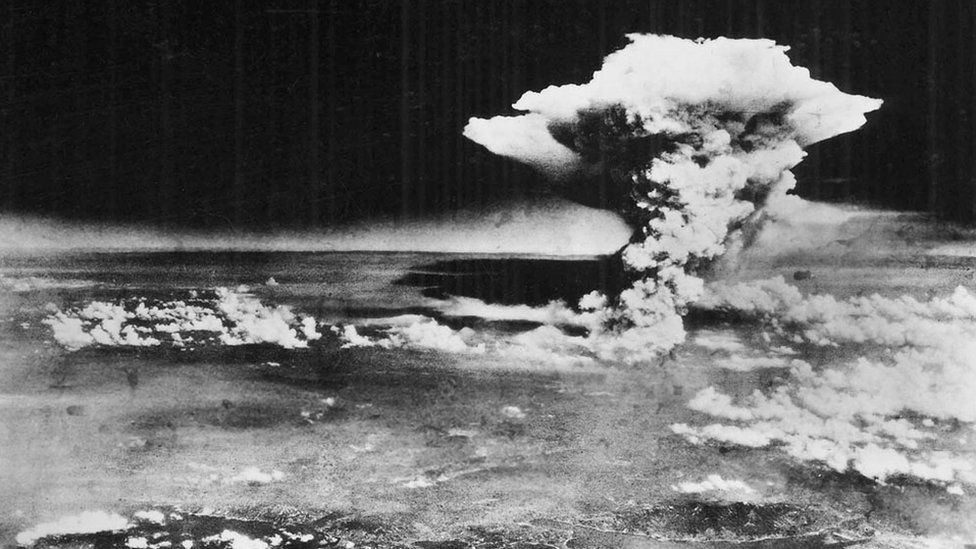
Hiroshima
On 6 August 1945, the United States dropped the “Little Boy” atomic bomb on the Japanese city of Hiroshima. The explosion instantly killed an estimated 80,000 people, with tens of thousands more dying in the following months from injuries and radiation sickness. The bomb destroyed around 90% of the city, leaving a lasting scar on the landscape and the people who survived.
Nagasaki
Just three days after the bombing of Hiroshima, the United States dropped the “Fat Man” atomic bomb on the city of Nagasaki on 9 August 1945. This bombing resulted in the deaths of an estimated 40,000 people, with many more suffering from injuries and radiation sickness. The destruction in Nagasaki was somewhat less extensive than in Hiroshima, but the city still suffered immense damage.
Japan’s surrender and the end of World War II
The bombings of Hiroshima and Nagasaki profoundly impacted the Japanese government, which soon realised that it could no longer continue the war under such circumstances. On 15 August 1945, Emperor Hirohito announced Japan’s unconditional surrender, ending World War II in Asia. The formal surrender was signed on 2 September 1945 aboard the USS Missouri.
Aftermath and long-term effects
The bombings of Hiroshima and Nagasaki left behind a legacy of death, destruction, and suffering that continues to be felt today. The survivors of the bombings, known as hibakusha, faced numerous physical and psychological challenges, including the stigma of being “atomic bomb survivors.” The bombings also increased awareness of the dangers of nuclear weapons and the need for international efforts to prevent their use in future conflicts.
Debates surrounding the bombings
The bombings of Hiroshima and Nagasaki remain the subject of considerable debate, with some arguing that they were necessary to bring about a swift end to the war and save lives. They also emphasised the strategic importance of demonstrating the power of the atomic bomb to the Soviet Union, which was emerging as a rival superpower in the post-war world.
In contrast, others view the bombings as unnecessary and disproportionate acts of violence against a civilian population. The bombings are considered war crimes and morally indefensible acts. They also question the morality of using such devastating weapons, which led to immense suffering and death among innocent civilians.
These debates continue to shape our understanding of the bombings and their implications for using nuclear weapons in warfare.
The bombings of Hiroshima and Nagasaki marked a turning point in World War II and the history of warfare, demonstrating the immense destructive power of nuclear weapons. The debates surrounding these bombings continue to shape our understanding of their justification, impact, and the broader implications of using nuclear weapons in a conflict. As we reflect on these tragic events, we must remember the immense human cost and strive for a future free from the threat of nuclear war.


Leave a Reply