
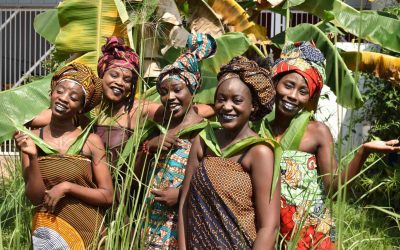
Zaire, now known as the Democratic Republic of the Congo (DRC), has a rich and complex history that spans centuries. This vast Central African nation was once known as the Belgian Congo during its colonial period and later renamed Zaire from 1971 to 1997 under the rule of Mobutu Sese Seko. The Democratic Republic of the Congo (DRC) history is marked by periods of remarkable prosperity and devastating conflict and human rights abuses.
Early history and the emergence of kingdoms
The first inhabitants
Evidence suggests that the area now known as the Democratic Republic of the Congo was populated as early as 80,000 years ago. The discovery of the Semliki harpoon at Katanda in 1988, one of the oldest barbed harpoons ever found, indicates that early inhabitants of the region hunted giant river catfish.
The rise of African kingdoms
Several African kingdoms emerged in the region between the 14th and early 19th centuries, including the Kingdom of Kongo, the Kingdom of Luba, the Kingdom of Lunda, and the Anziku Kingdom. The Kingdom of Kongo, in particular, controlled much of western and central Africa during this time, with a population of as many as 500,000 people at its peak.
Colonial Rule and the Scramble for Africa
The Atlantic Slave Trade
The late 19th century saw European powers vying for control over African territories in what is known as the “Scramble for Africa.” From approximately 1500 to 1850, the Atlantic slave trade ravaged the west coast of Africa, with the Congo region suffering the most intensive enslavement. Over a strip of coastline about 400 kilometres long, around 4 million people were enslaved and transported to sugar plantations in Brazil, the United States, and the Caribbean.
Exploration and Belgian colonisation
In the late 19th century, European explorers like Henry Morton Stanley began to explore and map the Congo region. King Leopold II of Belgium played a pivotal role in this period, seeking personal and national glory by acquiring African land. In 1885, the Berlin Conference granted Leopold control over the Congo Free State, a vast territory in Central Africa; this was the beginning of a brutal and exploitative regime.
The Congo Free State was a corporate state privately controlled by Leopold through the International African Association. This marked the beginning of Belgian colonisation in the region, lasting until the mid-20th century.
The Congo Free State and the Belgian Congo
Atrocities under King Leopold II
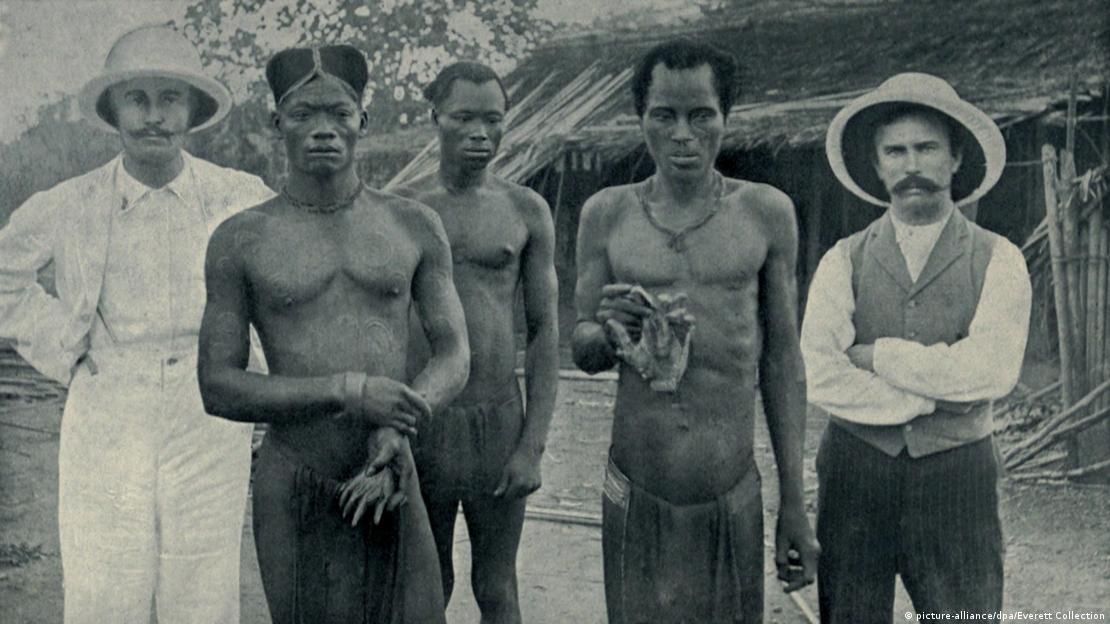
Under King Leopold II, the Congo Free State became infamous for widespread murder, torture, and other human rights abuses committed in the pursuit of rubber and other natural resources. These abuses were exposed by British Consul Roger Casement and other sources, leading to international outrage and pressure on Leopold to surrender control of the region.
The Belgian Congo (1908-1960)
In response to the mounting scandals, the Belgian government transferred control of the Congo from King Leopold II in 1908, establishing the Belgian Congo. Under the direct Belgian administration, the colonial government implemented policies that prioritised Belgian commercial interests and subjected the indigenous population to exploitation and racial segregation.
Economic exploitation
The Belgian Congo’s economy was primarily driven by the extraction of natural resources such as rubber, copper, diamonds, and gold. Belgian companies and the colonial administration reaped immense profits while the Congolese people faced severe exploitation and impoverishment. Infrastructure development, such as railways and ports, primarily served the extraction industries, reinforcing the colony’s role as a resource supplier.
Social and cultural impact
Colonial rule had profound social and cultural impacts on Congolese society. The Belgians imposed a rigid system of racial segregation and hierarchical control. Education was limited, emphasising vocational training designed to create a compliant labour force rather than fostering intellectual and social development. While contributing to some educational and healthcare improvements, missionary activities often undermined traditional cultures and beliefs.
The road to independence
Post-World War II changes
The end of World War II marked a turning point in colonial relations globally. The rise of nationalist movements and the changing geopolitical landscape led to increased demands for independence in many African colonies. In the Belgian Congo, political consciousness and activism began to grow, spurred by economic grievances and the influence of Pan-Africanism.
The rise of Congolese nationalism
By the late 1950s, several political parties and movements had emerged in the Belgian Congo, advocating for independence. Notable among these were the Mouvement National Congolais (MNC) led by Patrice Lumumba and the Alliance des Bakongo (ABAKO) led by Joseph Kasa-Vubu. Despite differing in their visions for the future, these groups were united in their demand for self-governance.
The independence struggle
Tensions escalated in the late 1950s as Congolese demands for independence grew more assertive. Strikes, protests, and clashes with colonial authorities became more frequent. The Belgian government, recognising the untenable situation, hastily organised a round-table conference in January 1960. The conference resulted in an agreement for Congo’s independence, scheduled for 30 June 1960.
The birth of the Republic of Congo and early challenges
Independence Day: 30 June 1960
On 30 June 1960, the Republic of Congo (Léopoldville) was officially declared independent. Patrice Lumumba became the Prime Minister, and Joseph Kasa-Vubu assumed the role of President. The transition, however, was far from smooth. The new nation faced immediate challenges, including political fragmentation, ethnic tensions, and an ill-prepared administration.
Political instability and civil strife
Shortly after independence, the Congo plunged into political chaos. The mutiny of the Force Publique, the national army, against its Belgian officers and the secession of the mineral-rich provinces of Katanga and South Kasai exacerbated the situation. The UN intervened, but the situation remained volatile, leading to a power struggle between Lumumba and Kasa-Vubu.
Assassination of Patrice Lumumba
The Cold War context influenced the Congo Crisis, with both the United States and the Soviet Union vying for influence. In January 1961, Lumumba was captured and subsequently executed under suspicious circumstances, with alleged involvement by Belgian and CIA operatives. His death marked a tragic turning point and intensified the turmoil in the newly independent state.
The reign of Mobutu Sese Seko and the birth of Zaire
The consolidation of power
Following the end of the Congo Crisis in 1965, Joseph Mobutu seized absolute power in the country and later renamed it Zaire. He embarked on a campaign to Africanize the nation, changing his own name to Mobutu Sese Seko Kuku Ngbendu Wa Za Banga and demanding that citizens adopt traditional African names. Mobutu’s regime was marked by repression of opposition and widespread corruption.
The weakening of Mobutu’s rule and the First Congo War
By the 1990s, Mobutu’s regime had weakened significantly, forcing him to agree to a power-sharing government with opposition parties. However, promised elections never materialised, and the First Congo War erupted in 1996. Rwanda invaded Zaire, and Mobutu was eventually ousted from power.
The Democratic Republic of the Congo and the Second Congo War
The rise of Laurent-Desire Kabila
In 1997, Laurent-Desire Kabila took power in the Congo and renamed the country the Democratic Republic of the Congo. However, his rule was short-lived, as the Second Congo War broke out in 1998, drawing in various African nations and resulting in millions of deaths and displacements.
The assassination of Kabila and the election of Joseph Kabila
Laurent-Desire Kabila was assassinated in 2001, and his son, Joseph Kabila, took over as president. He quickly sought peace and was elected president by the Congolese government in 2006. Joseph Kabila later resumed complete control of the DRC and was re-elected in a disputed election in 2011.
The peaceful transfer of power and the election of Felix Tshisekedi
In 2018, Felix Tshisekedi was elected president in the first peaceful transfer of power since the DRC’s independence. This marked a significant milestone in the nation’s history and raised hopes for a more stable political future.
The Democratic Republic of the Congo has a long and complex history, marked by periods of prosperity, colonisation, conflict, and political upheaval. As the nation continues to grapple with the challenges of governance and development, understanding its historical context is crucial to addressing the issues it faces today.


Leave a Reply