• Skip to main content
  • Skip to after header navigation
  • Skip to site footer
Our history archive

Our History

Our History Archive, where history comes to life

  • Home
  • Colonisation
  • World History
  • Civil Rights
  • World cultures
  • Features
  • Wellbeing
  • Popular Culture

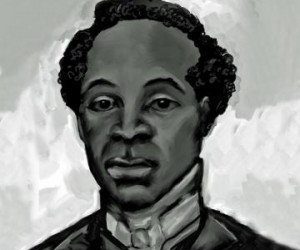
Samuel Sharpe – 1801-1832 – Jamaica’s National Hero

Samuel Sharpe, national hero
Features
5 March, 1999

Samuel Sharpe is one of Jamaica’s National Heroes. He was the main instigator of the 1831 Slave Rebellion, which began on the Kensington Estate in St James, Jamaica and which was largely instrumental in bringing about the abolition of slavery.

Because of his intelligence and leadership qualities, Sam Sharpe became a “daddy”, or leader of the native Baptists in Montego Bay. Religious meetings were the only permissible forms of organised activities for the slaves. Sam Sharpe was able to communicate his concern and encourage political thought, concerning events in England which affected the slaves and Jamaica.

71 years after Tacky’s Rebellion, Sam evolved a plan of passive resistance whereby the slaves would refuse to work on Christmas Day of 1831 and afterwards, unless their grievances concerning the better treatment and the consideration of freedom, were accepted by the state owners and managers. This came to be known as the Christmas Rebellion.


Sam explained his plan to his chosen supporters after his religious meetings and made them kiss the Bible to show their loyalty. They, in turn, took the plan to the other parishes until the idea had spread throughout St. James, Trelawny, Westmoreland, and even St. Elizabeth and Manchester.

Word of the plan reached the ears of some of the planters. Troops were sent into St. James and warships were anchored in Montego Bay and Black River, with their guns trained on the towns.
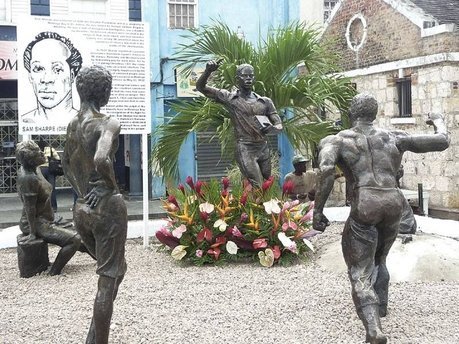
Sam Sharp statue
Statues of National Hero Samuel Sharpe and his followers in Sam Sharpe Square, Montego Bay

On 27 December  1831, the Kensington Estate Great House was set on fire, as a signal that the Slave Rebellion had begun. A series of other fires broke out in the area and soon it was clear that the plan of non-violent resistance, which Sam Sharpe had originated, was impossible and impractical.

Armed rebellion and seizing of property spread mostly through the western parishes, but the uprising was put down by the first week in January.


Terrible retribution followed. While 14 whites died during the Rebellion, more than 500 slaves lost their lives – most of them as a result of the trials that came after.

Samuel Sharpe was hanged on 23 May  1832. In 1834 the Abolition Bill was passed by the British Parliament and in 1838, slavery was abolished.

Sharpe had said: “I would rather die upon yonder gallows than live in slavery”.

Share this:

  • Share on Facebook (Opens in new window) Facebook
  • Share on X (Opens in new window) X
  • Share on Reddit (Opens in new window) Reddit
  • Share on Pinterest (Opens in new window) Pinterest
  • Share on WhatsApp (Opens in new window) WhatsApp


Related

You May Also Like…

More details Jesse Jackson surrounded by marchers carrying signs advocating support for the Hawkins-Humphrey Bill for full employment,

Keep hope alive: The rise, power, and legacy of Jesse Jackson

The revolutionary icon: Ernesto "Che" Guevara

Ernesto “Che” Guevara: : The revolutionary icon

Portrait of Bartolomé de Las Casas (c.1484 - 1566)

Bartolomé de las Casas and the birth of human rights

William Randolph Hearst

William Randolph Hearst: The king of Yellow Journalism


Reader Interactions

Leave a ReplyCancel reply

Sidebar

This Day In History

No Events

More details Jesse Jackson surrounded by marchers carrying signs advocating support for the Hawkins-Humphrey Bill for full employment,

Keep hope alive: The rise, power, and legacy of Jesse Jackson

The revolutionary icon: Ernesto "Che" Guevara

Ernesto “Che” Guevara: : The revolutionary icon

Portrait of Bartolomé de Las Casas (c.1484 - 1566)

Bartolomé de las Casas and the birth of human rights

Trending

  • Mexican culture: A living mosaic of civilisations, faith, and tradition
    Mexican culture: A living mosaic of civilisations, faith, and tradition
  • The rise and fall of the Persian Empire
    The rise and fall of the Persian Empire
  • The British Empire: An overview of empire and colonisation
    The British Empire: An overview of empire and colonisation
  • The 1972 Munich Olympics massacre
    The 1972 Munich Olympics massacre
  • Holy Wars: The blood-soaked legacy of conflicts fought in the name of Christianity
    Holy Wars: The blood-soaked legacy of conflicts fought in the name of Christianity
  • The history of South Africa: From colonisation to independence
    The history of South Africa: From colonisation to independence
  • The Arab slave trade
    The Arab slave trade
  • History of Canada - From colonisation to independence
    History of Canada - From colonisation to independence
  • The rise and fall of the Ottoman Empire: Six centuries of imperial power
    The rise and fall of the Ottoman Empire: Six centuries of imperial power
  • McCarthyism and the Cold War: America's Second Red Scare
    McCarthyism and the Cold War: America's Second Red Scare

Connect

  • YouTube
  • TikTok
  • Bluesky

ABOUT

CONTACT

PRIVACY POLICY

COOKIES

Copyright © 2026 · Our History · All Rights Reserved