
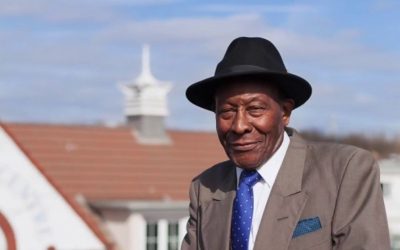
Roy Hackett, a remarkable figure in the civil rights movement, not only left an indelible mark on the city of Bristol, but he also played a crucial role in shaping its history. Born in Jamaica and later moving to England, his life’s experiences prepared him well for his role in one of Britain’s most significant instances of activism – the Bristol Bus Boycott. This blog post delves into Roy Hackett’s life, exploring his experience growing up in Jamaica, and how it contributed to his actions during the Bristol Bus Boycott.
Early life in Jamaica
Roy Hackett was born on 3 June 1928 in Thompson Town, Clarendon Parish, Jamaica. Growing up in a farming family, he deeply understood the sacrifices and hard work required to sustain a modest life. Little did he know that this humble upbringing would mold him into a resilient activist capable of withstanding adversity.
As a young man in Jamaica, Roy worked odd jobs before becoming part of the Island Traffic Authority as a traffic warden. His experiences with racism and discrimination while working with traffic police helped fuel his desire to fight for justice and equality later in his life.
Arrival in England and life in Bristol
In 1952, enticed by the possibility of better job opportunities and improved living conditions for his family, Roy Hackett emigrated from Jamaica to England. The journey was long and arduous; however, upon arriving at Avonmouth docks near Bristol in 1953, he found himself united with other West Indian immigrants looking to establish new lives on British soil.
Over the years, Roy worked various jobs around the city of Bristol. Racism and discrimination were pervasive throughout the workforce at that time, leading Roy to become even more passionate about fighting for civil rights for all people.
The Bristol Bus Boycott
In response to the discriminatory hiring and wage policies faced by Black and other ethnic minority workers, Roy Hackett, along with Owen Henry, Paul Stephenson, Guy Reid-Bailey, and Prince Brown founded a group named the West Indian Development Council (WIDC), in 1962. The organisation aimed to combat discrimination faced by immigrants in employment and housing.
The same year, when a young Black man named Guy Bailey was refused an interview for a job at the Bristol Omnibus Company due to their policy of not employing Black bus crews, the WIDC took action. Led by Paul Stephenson, Roy Hackett supported a campaign to boycott Bristol’s buses, which became widely known as the “Bristol Bus Boycott.”
For approximately four months, the boycott gathered momentum. The struggle eventually garnered attention from national media outlets and forced the Bristol Omnibus Company to rescind its racist policy on 28 August 1963. Although it was still an uphill battle for equal rights in Bristol, this victory proved monumental.
Legacy
Roy Hackett’s incredible involvement in the civil rights movement remains an inspiring story of determination and courage. His life in Jamaica instilled within him the value of hard work and resilience that fuelled his passion for justice. Despite facing constant adversity in Bristol, Roy persisted in challenging discriminatory practices and was instrumental in affecting impactful change – both during the Bristol Bus Boycott and beyond.
In recognition of his pioneering work on racial equality in Bristol, various tributes have been dedicated to Roy Hackett’s memory. A plaque honoring him can be found at Bristol’s City Hall – an enduring testament to his commitment towards justice and equality for all.
Roy Hackett passed away on 3 August 2022.


Leave a Reply