• Skip to main content
  • Skip to after header navigation
  • Skip to site footer
Our history archive

Our History

Our History Archive, where history comes to life

  • Home
  • Colonisation
  • World History
  • Civil Rights
  • World cultures
  • Features
  • Wellbeing
  • Popular Culture

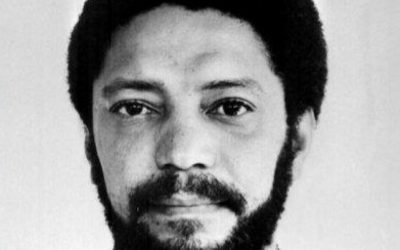
Maurice Bishop: A revolutionary leader in Grenada’s history

Maurice Bishop
World history
13 February, 2021

Maurice Bishop, born on 29 May 1944 in Aruba to Grenadian parents, was a charismatic leader whose life and political career left an indelible mark on the history of Grenada. Educated in Britain, Bishop became a qualified barrister, but his heart lay in the socio-political issues of his homeland.

In the early 1970s, Bishop emerged as a prominent figure in the New Jewel Movement (NJM), a party advocating for socio-economic reforms in Grenada. The NJM’s ideology, deeply rooted in Marxism–Leninism, sought to address the disparities and challenges faced by the Grenadian people under the Eric Gairy regime, notorious for corruption and human rights abuses.

Bishop’s ascent to power was marked by his overthrow of Gairy in a bloodless coup on 13 March 1979. The world watched as this small island nation embarked on a path of revolutionary change under Bishop’s leadership. His government initiated significant health, education, and housing reforms, aiming to uplift the living standards of the Grenadian populace. Bishop’s focus on social justice and economic equality garnered widespread support among Grenadians.


However, Bishop’s administration was not without its controversies. His alignment with Cuba and the Soviet Union during the Cold War era raised eyebrows in the West, particularly in the United States. Bishop’s government was accused of suppressing opposition and limiting press freedom, which marred his otherwise popular image.

Maurice Bishop and Fidel Castro

The most tumultuous period of Bishop’s leadership came in October 1983. Internal rifts within the NJM led to Bishop’s house arrest, orchestrated by hardline Marxist members of his own party. This event triggered mass protests, as thousands of Grenadians rallied for Bishop’s release. The situation escalated rapidly, leading to Bishop’s tragic execution on 19 October 1983.

Bishop’s death plunged Grenada into chaos, precipitating a U.S.-led invasion known as Operation Urgent Fury. The invasion, justified by the Reagan administration as a measure to protect American citizens and restore order, led to the installation of a new government in Grenada.

Honours

On 29 May 2009, Grenada’s international airport, formerly known as Point Salines International Airport, was renamed Maurice Bishop International Airport. This renaming was a significant gesture, honouring Bishop’s contributions to Grenada. At the ceremony, St. Vincent and the Grenadines Prime Minister Ralph Gonsalves remarked that this was a “belated honour to an outstanding Caribbean son” and a step towards bringing closure to a chapter in Grenada’s history.

In 1983, Bishop was posthumously awarded the Czechoslovak Order of the White Lion ​​. This award, given by a foreign country, demonstrates the international recognition of Bishop’s influence and contributions.


Legacy

Maurice Bishop’s legacy is complex and multifaceted. To many, he remains a hero and a martyr, a leader who dared to dream of a better Grenada. His education and social services policies had a lasting impact on the island’s development. Yet, his administration’s authoritarian tendencies and international alignments are points of critique and debate among historians.

Maurice Bishop stands out as a figure of transformation and controversy in the annals of Caribbean history. His leadership highlights the complexities of post-colonial politics and the struggle for socio-economic reforms in small island nations. Bishop’s life and political journey, culminating in his tragic end, reflect the turbulent dynamics of Grenada’s history during the late 20th century.

Share this:

  • Share on Facebook (Opens in new window) Facebook
  • Share on X (Opens in new window) X
  • Share on Reddit (Opens in new window) Reddit
  • Share on Pinterest (Opens in new window) Pinterest
  • Share on WhatsApp (Opens in new window) WhatsApp

Related

You May Also Like…

More details Merida - Palacio de Gobierno - Murals by Fernando Castro Pacheco: The Spanish bishop Diego de Landa is burning figures of Mayan deities

The forgotten fire: A history of the Darfur Genocide

The Japanese occupation of Beiping (Beijing) in China

The rise and fall of the Japanese Empire

Rescuers and residents searching the rubble of the destroyed Shajareh Tayyebeh elementary school in Minab

The fracturing of the international order in an age of impunity

US ambassador to the UN, Eleanor Roosevelt, holding the Universal Declaration of Human Rights in 1949

The role and limitations of international law in world affairs


Reader Interactions

Leave a ReplyCancel reply

Sidebar

This Day In History

Person
On this day in 1949 Musician, poet and author Gil Scott-Heron was born.
On this day in 2017 Political activist and media personality Leighton Rhett Radford, better known as Darcus Howe, died.

World history recent posts in

More details Merida - Palacio de Gobierno - Murals by Fernando Castro Pacheco: The Spanish bishop Diego de Landa is burning figures of Mayan deities

The forgotten fire: A history of the Darfur Genocide

The Japanese occupation of Beiping (Beijing) in China

The rise and fall of the Japanese Empire

Rescuers and residents searching the rubble of the destroyed Shajareh Tayyebeh elementary school in Minab

The fracturing of the international order in an age of impunity

US ambassador to the UN, Eleanor Roosevelt, holding the Universal Declaration of Human Rights in 1949

The role and limitations of international law in world affairs

Trending

  • The rise and fall of the Persian Empire
    The rise and fall of the Persian Empire
  • Holy Wars: The blood-soaked legacy of conflicts fought in the name of Christianity
    Holy Wars: The blood-soaked legacy of conflicts fought in the name of Christianity
  • Francisco Franco: Spain's controversial dictator
    Francisco Franco: Spain's controversial dictator
  • The 1972 Munich Olympics massacre
    The 1972 Munich Olympics massacre
  • What are British values?
    What are British values?
  • What is French culture?
    What is French culture?
  • Bay of Pigs 1961: The CIA’s failed invasion that changed the Cold War
    Bay of Pigs 1961: The CIA’s failed invasion that changed the Cold War
  • The British Empire: An overview of empire and colonisation
    The British Empire: An overview of empire and colonisation
  • 13 days to armageddon: The Cuban Missile Crisis explained
    13 days to armageddon: The Cuban Missile Crisis explained
  • The First Red Scare: America's post-WWI fear of Communism and radical change
    The First Red Scare: America's post-WWI fear of Communism and radical change

Connect

  • YouTube
  • TikTok
  • Bluesky

ABOUT

CONTACT

PRIVACY POLICY

COOKIES

Copyright © 2026 · Our History · All Rights Reserved