
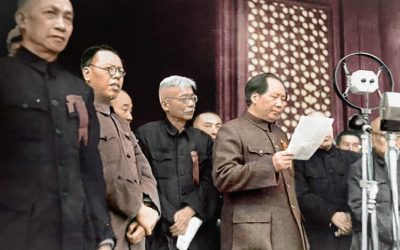
Mao Zedong, also referred to as Chairman Mao, was a Chinese communist revolutionary who became the founding father of the People’s Republic of China (PRC). Born on 26 December 1893 in Shaoshan, Hunan Province, Mao played a significant role in shaping modern China. His leadership and theories have influenced international politics and have been the subject of heated debate. This article will delve into the life and achievements of Mao Zedong, as well as the controversies surrounding his rule.
Early life

Mao Zedong was born into a wealthy peasant family and initially sought an education in Hunan Province. He later moved to Beijing, where he came into contact with communist ideologies that catalysed his radical political beliefs. In 1921, Mao co-founded the Chinese Communist Party (CCP) along with Chen Duxiu and Li Dazhao. He began advocating for revolutionary changes to Deng Xiaoping’s economic policies.
The Long March and rise to power
In 1934, Mao emerged as a prominent figure during the Long March, a tactical military retreat undertaken by the Red Army to evade the Kuomintang forces led by Chiang Kai-shek. The gruelling one-year trek covered over 9,000 kilometres and resulted in tremendous casualties. However, it symbolised the tenacity and resilience of the Communist forces.

After World War II erupted in 1937, Japan invaded China, forcing Chiang Kai-shek’s Nationalist government to collaborate with the Communists to counter this threat. The alliance didn’t last long once Japan was defeated in 1945. A civil war ensued between Chiang’s Nationalists (KMT) and Mao’s Communists (CCP). By 1 October 1949, Mao announced the establishment of the People’s Republic of China, paving the way for long-standing communist rule in the new republic.
The Great Leap Forward
In 1958, Mao embarked on an ambitious economic and social campaign called the Great Leap Forward. The goal was to transform China into an industrialised nation through rapid collectivisation and centralisation of resources. However, this policy proved disastrous, causing widespread famine, economic collapse, and millions of deaths.
Cultural Revolution
The Cultural Revolution was a socio-political movement launched by Mao Zedong in 1966. Aimed at reinvigorating communist ideals and purging Chinese society of capitalist and traditional influences, it led to unprecedented chaos and violence across the country. Schools were shut down, intellectuals and educators were persecuted or killed, and millions of lives were negatively impacted. The Cultural Revolution came to an end in 1976 with Mao’s death.
Legacy and controversy
Mao Zedong’s legacy is debated among historians and political analysts. His supporters argue that he successfully led China towards independence from foreign imperialism, united the country, and improved living standards through his policies. Subsequent Chinese leaders like Deng Xiaoping implemented economic reforms based on Mao’s vision.
However, critics argue that Mao’s ideological extremism caused profound suffering with significant social upheaval under his rule, resulting in tens of millions of deaths from famine, persecution, and forced labour. Controversial policies like the Great Leap Forward and the Cultural Revolution have left scars on generations of Chinese people.
Conclusion
Mao Zedong was a transformative yet controversial leader who shaped modern China. His contributions to liberating China from foreign oppression cannot be ignored; however, the human cost associated with his visions remains a contentious topic today. As history continues to be re-evaluated and re-interpreted, it is difficult to predict the future of the legacy of Mao Zedong.


.jpg)
Leave a Reply